World Assistive Technology Day
Remarks by the UN Resident Coordinator
Allow me to pay my respect to:
His Majesty King Letsie III
The Right Honourable the Prime Minister
The Honourable President of the Senate
The Honourable Speaker of the National Assembly
The Honourable Deputy Prime Minister
Honourable Ministers, in particular the:
- Minister of Gender, Youth and Social Development
- Minister of Health
- Minister of Education and Training
- Minister of Information, Communications, Science, Technology and Innovation
- Minister of Law and Justice
- Minister of Finance and Development Planning
- Minister of Public Works and Transport
Their Excellencies, Members of the Diplomatic Corps
Senior Government Officials
Representatives of Organizations of Persons with Disabilities
Members of Civil Society and Non-Governmental Organizations
Members of the Media
Distinguished Guests
Ladies and Gentlemen
Good morning…
Honourable Ministers, Bo Mme le Bo Ntate,
It is a privilege to join you in marking World Assistive Technology Day, a day to celebrate not only innovation but also our shared commitment to dignity, inclusion, and equality for all.
We increasingly understand that technology is not a luxury, it is essential. For persons with disabilities, Assistive Technology is a gateway to independence and opportunity. Whether it is a screen reader that enables access to education, or a prosthetic limb that restores mobility, these tools are transforming lives.
Here in Lesotho, we are already seeing the impact. Earlier this year, with support from the UN, LNFOD launched the Potato Festival under the LEFEDI initiative—an enterprise led by persons with disabilities. From potatoes, they are producing food, cosmetics, and medical products, supplying supermarkets and vendors across the country. LEFEDI now employs 12 individuals with disabilities and is expanding its production capacity. Through this initiative, the UN is also working to support them with assistive technologies that will enhance their work and increase their products for markets. This is more than innovation, it’s economic inclusion in action.
Stories like these remind us why this work matters. Assistive technology enables individuals to participate fully in education, employment, and society. It also unlocks national potential; when everyone can contribute, we all benefit.
We commend the Government of Lesotho for its efforts, including the formation of the Disability Advisory Council and the development of the National Disability and Assistive Technology Policy. These are critical steps forward.
The UN is proud to partner in these efforts, from infrastructure improvements to inclusive workplace practices. But more is needed. Many still lack access due to cost and availability. That is why we urge greater investment in local production of Assistive Technology, creating jobs, spurring innovation, and delivering solutions tailored to Basotho realities.
Articles 4 and 9 of the Convention on the Rights of Persons with Disabilities call us to act, not just through policies, but through funding, coordination, and accountability. Most importantly, by ensuring that persons with disabilities are at the center of every decision that affects them.
Let us continue to listen, to work together, and to build a more inclusive future.
To all our partners, thank you. Your efforts matter deeply. But today, I urge us all: let us move from policy to practice, from words to action.
Assistive Technology is not just about devices, but it is about people. About ensuring that every individual, regardless of ability, can thrive with dignity.
Together, let us make that a reality in Lesotho.


Speech by
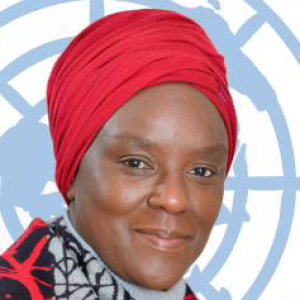
Ms. Amanda Khozi Mukwashi
Goals we are supporting through this initiative