Every Child Counts: Linking Nutrition, Water, and Identity to a Better Future
From clean water to legal identity, how Ha-Tankele is transforming childhood with support from the Ntlafatsa Bana project.
At the community playground in Ha-Tankele, under the Qhoasing Community Council, the air is filled with the sounds of celebration and quiet moments of life-changing impact. Families gather not just for an event, but to witness a shift in how essential services reach the most underserved communities.
The visit marked a major milestone in the Equitable Lesotho – Ntlafatsa Bana project, a joint initiative of the Government of Lesotho, the European Union, and UNICEF, which brings together clean water, child nutrition, legal identity, energy access, and social protection, all designed to help children and families thrive.
When Marelebohile Tikiso, 52, walked across the field with two young children in tow, she was carrying more than just a day’s anticipation. She carried hope and years of waiting.
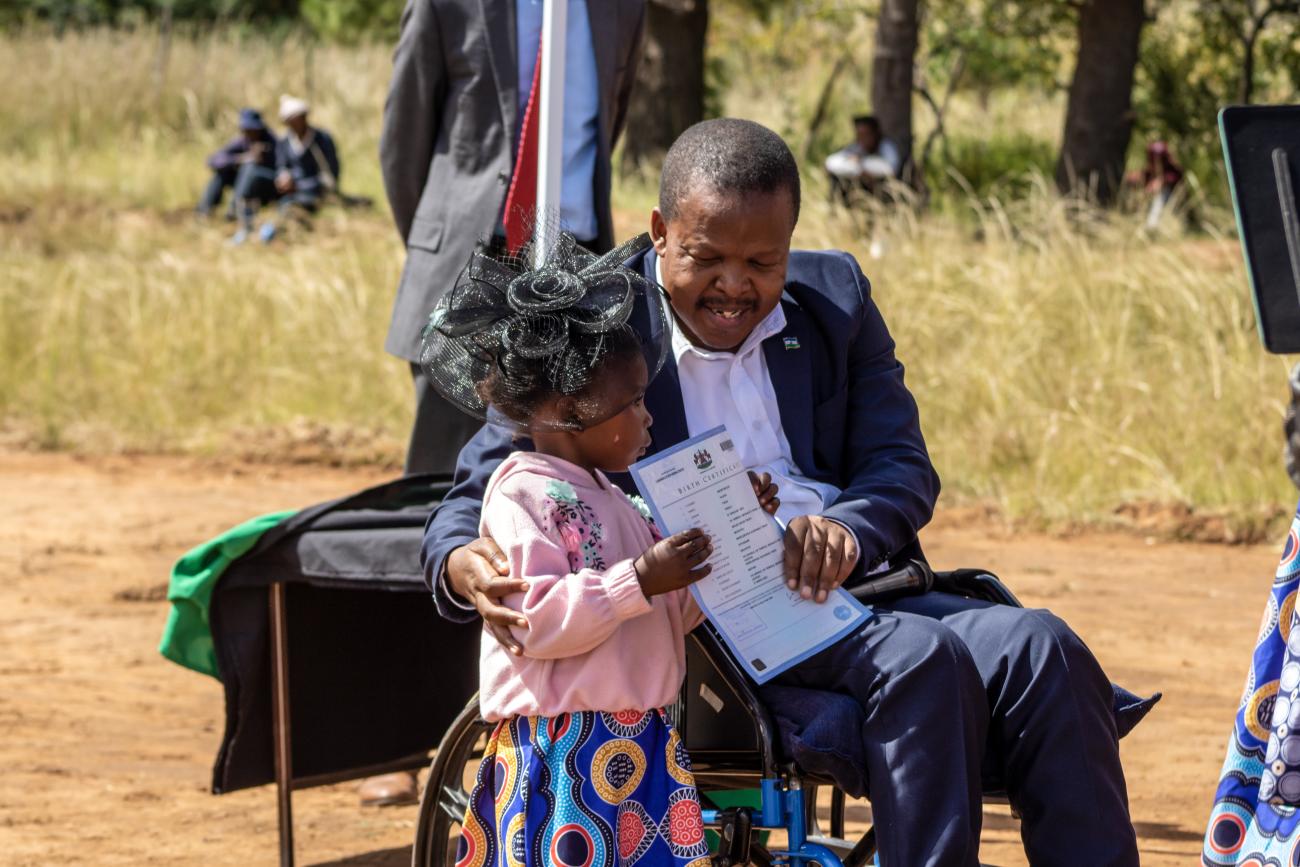
A mother of four and guardian to three children from her sister-in-law, Marelebohile stood quietly as Palesa and Lethabo, both aged four but not twins, finally received something she had tried to secure for years: birth certificates.

“I applied four years ago,” she said, holding the freshly printed papers. “But the certificates never came. Today, they are finally here. The children now have names recognized by the state. Now I can apply for the child grant.”
This milestone was made possible by the project’s digital birth registration system, which has replaced slow, manual processes with real-time tablet-based registration. Operated by trained Village Health Workers and Civil Registration Officers, the system is integrated with NISSA—Lesotho’s national social assistance database—helping families access healthcare, education, and social grants more efficiently.
Just steps away, Mamello Moholoholo, a Village Health Worker, sat with other members of the Iphepeng Breastfeeding and Nutrition Club, behind a table lined with dried peaches, motoho, moroho, handmade brooms, beans, and beetroot. The group meets twice a month for shared cooking sessions, nutrition education, and growth monitoring of children under five.

“Everyone brings what they can—sometimes cabbage, sometimes beans,” Mamello said. “Even if someone comes empty-handed, they leave with knowledge. That’s what matters.”
Their club is one of 30 across Lesotho supported through the project, promoting home gardening and peer learning to tackle child malnutrition. A fruit dryer provided by the project will soon allow them to process and sell produce—once recent heavy rains pass.
Meanwhile, the community has also benefited from a rehabilitated water system, including source protection, pipe replacements, and standpipes. A community-led maintenance plan ensures the improvements last well into the future.

The visit to Ha-Tankele brought national attention, with ministers, diplomats, and UNICEF leadership engaging directly with the community—seeing for themselves the real-world impact of a project that is turning policy into progress.
“Before this, they didn’t exist on paper,” Marelebohile said of the children. “But now, I can go to the Ministry and ask for help. I can finally say: these are my children—and they belong.”
For Mamello, the change is just as real. “When children are well-fed, when mothers are supported, and when everyone has water and documents,” she said, “the whole village grows stronger.”
In Ha-Tankele, the Ntlafatsa Bana project is not just a development programme—it’s a deeply human shift, helping families not only survive, but build futures filled with dignity, identity, and opportunity.


Written by
UN entities involved in this initiative
Goals we are supporting through this initiative